Introduction
Peer-to-peer (P2P) transactions have grown rapidly in recent years.
They allow individuals to trade directly — often for currency exchange, crypto conversion, or cross-border payments.
At first glance, P2P seems fast and flexible.
But flexibility without structure can create risk.
That is where WaidTred introduces a different approach.
What Is P2P?
P2P (peer-to-peer) transactions involve two individuals directly exchanging value, usually through:
- Messaging apps
- Informal marketplaces
- Crypto exchange platforms
- Social media groups
While this method can be convenient, it often depends heavily on personal trust.
And that is where problems begin.
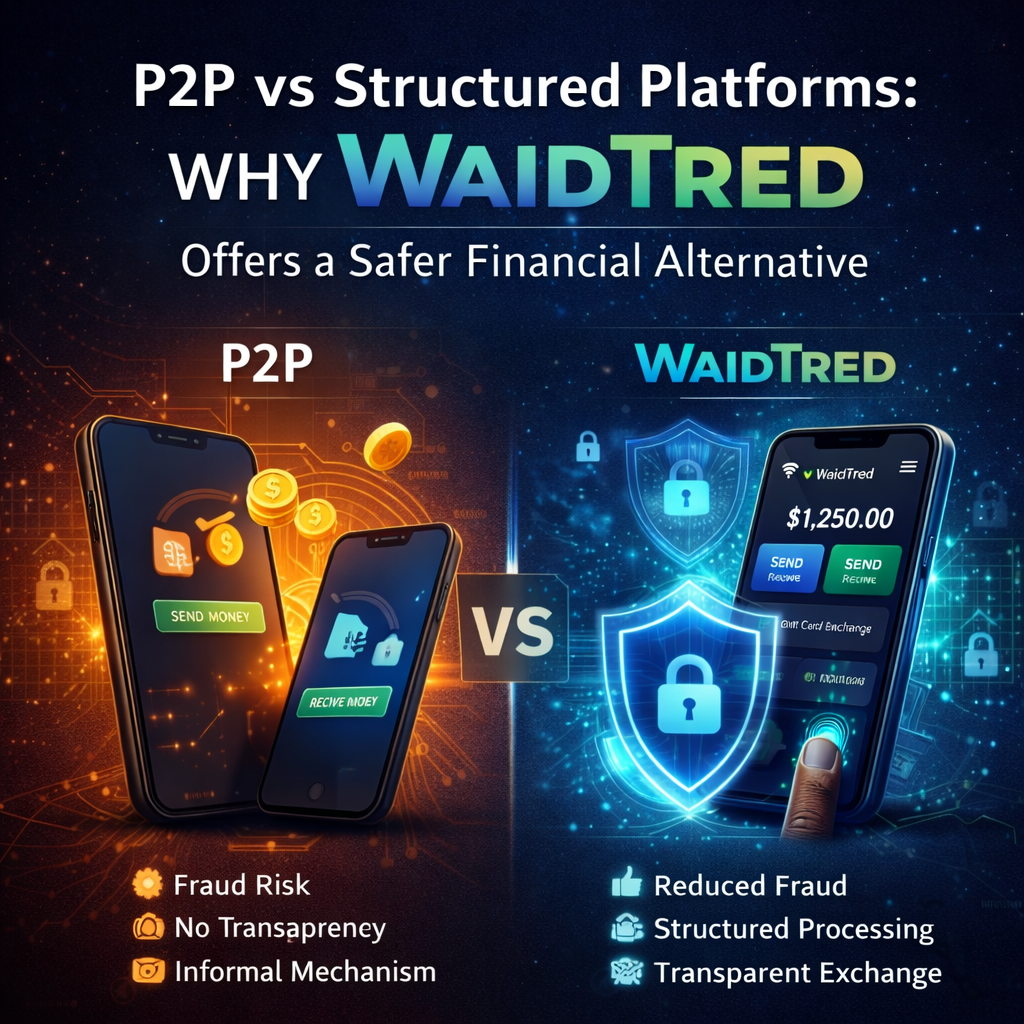
The Risks of Pure P2P Systems
Users commonly face:
- Fraudulent counterparties
- Fake payment confirmations
- Chargebacks
- Account freezes
- No structured dispute resolution
- Inconsistent rates
- Lack of accountability
In P2P, if something goes wrong, recovery can be difficult.
Trust becomes personal instead of systemic.
How WaidTred Is Different
WaidTred is not built on informal matching.
It is built on structured processing.
1️⃣ Platform-Controlled Flow
Transactions are processed within a monitored system rather than relying solely on two individuals trusting each other blindly.
This reduces fraud exposure.
2️⃣ Transparent Exchange Mechanism
Rates and processes are structured — not randomly negotiated per individual transaction.
This protects users from manipulation.
3️⃣ Reduced Counterparty Risk
In P2P, your safety depends on the person on the other side.
With WaidTred, your safety depends on the platform structure.
That is a major difference.
4️⃣ Long-Term Scalability
P2P systems work at small scale.
But for serious cross-border financial infrastructure, structure matters.
WaidTred is designed to scale responsibly — across regions and regulatory environments.
Why This Matters for Africa
Many African users rely heavily on informal P2P systems because formal options are limited.
But informal systems create:
- Financial anxiety
- Payment uncertainty
- Unstable pricing
- Repeated scam exposure
WaidTred aims to provide a structured alternative — reducing dependency on risky arrangements.
The Bigger Picture
P2P was an innovation phase.
Structured cross-border platforms represent the next phase.
As global finance matures, users will demand:
- Accountability
- Transparency
- Compliance
- Consistency
WaidTred is built for that future.
Final Thought
Speed is important.
But security is essential.
P2P may offer convenience.
WaidTred offers structure.
And in finance, structure wins long term.
Leave a Reply